|
|
|
|
||
|
þ |
Birgu Groundfloor Premises | To Let: Can be rented for Commercial or Residential purposes | ||
|
|
|
|||
|
|
Address: 28/30 Girolamo Cassar Street, Vittoriosa, Malta
Facade up Girolamo Cassar Street, Vittoriosa
Cross Section to Entrance in No. 28 and Interior Room
Ceiling of Entrance in No. 28
Connecting Door from Entrance 28 to Room in No. 30
Inner Room in No 28
Inner Room in No. 28
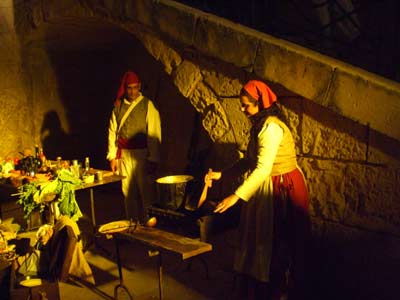
Girolamo Cassar Street by Night:
Contact Owners on (00356) 21410743 Malta
|
|
|
Contact Owners on (00356) 21410743 Malta
Facade down Girolamo Cassar Street, Vittoriosa
Layout:
Ceiling in Room from Entrance in No 30:
Well Feature in Room from Entrance No. 30
Yard in Inner Room in No. 28
Inner Room in No. 28 from opposite yard.
Frontage for No. 28 and 30 :
Location:
|


|
|
"A dizzying aroma of freshly baked bread wafts into Victory Square in the old Jewish Quarter in Vittoriosa. It is early morning and the town's only bakery is rolling up the shutters. A lone priest scurries towards the magnificient church dedicated to patron Saint Lawrence. The Cafe du Brazil, at the far end of the square, greets its first customers.
A labyrinth of narrow streets - 58 of them , all webbing
into each other, many with granite steps leading down to the
waterfront-awaken. Women come out on balconies to hang the washing and
myriad colours flap in the wind. A thin sun chases away the grey
overcast of a mildly cold Mediterranean February day. By lunchtime,
temperatures will rise to 16oC.
Along with Senglea across the creek and Cospicua down the
road, it makes up a trio of municipalities known as the Three Cities, in
the core of Cottonera in the island nation's deep south. Vittoriosa, has
been transformed in recent years by its forward-thinking mayor.
It was severely blitzed during the second world war and
was left idling in torpor for decades. But a staggering, variety of
historic buildings has managed to survive.
Within its honeycomb of confined streets are crammed 1,030 dwellings, extensive wharfs, a treasury, a hospital, a bishop's palace, the bakery, a hangman's residence, an arsenal, quarters where the poor lived, courts of justice, a university and the auberges, once the residences of Italian, French, British and German Knights. A tableau in bronze on a monument that sidles up to the church of St. Lawrence marks the departure of the last of the colonial powers - the British, in 1979.
At night, the haunting history of Vittoriosa, also called
Birgu, in Malta, feels all too real.
At the Auberge d'Angleterre, once the residency of the British knights of St. John, a government-run public library offers a decent range of titles including some by John Steinbeck and, fittingly, British Poetry since 1945. This town is proud of its Anglophilia and the Mayor's plans to twin Vittoriosa with HMS Illustrious, the British aircraft carrier. His next project is to rebuild the tower in the middle of Victory Square, from which Jean Parisot de la Valette kept a keen eye on the rise of his dream city, the new Maltese capital Valletta, across the sleepy waters.
Fashionable annual events, including Birgu by Candlelight in October, attract thousands of visitors, while the feasts of St. Lawrence and of St. Dominic in August are spectacles of unrivalled gaiety and colour for residents. The next development is likely to be a five-star hotel next to the casino.
Mandy Flynn and her husband James also moved from the UK to Malta after retiring from their jobs nine years ago and are surprised at how quickly the market is changing.
Adapted from an article by Godfrey Grima in London's Financial Times |
|